High-Dose Flu Shot Linked to Lower Alzheimer's Risk in Older Adults
The high-dose flu vaccine may reduce Alzheimer's risk by 55%.

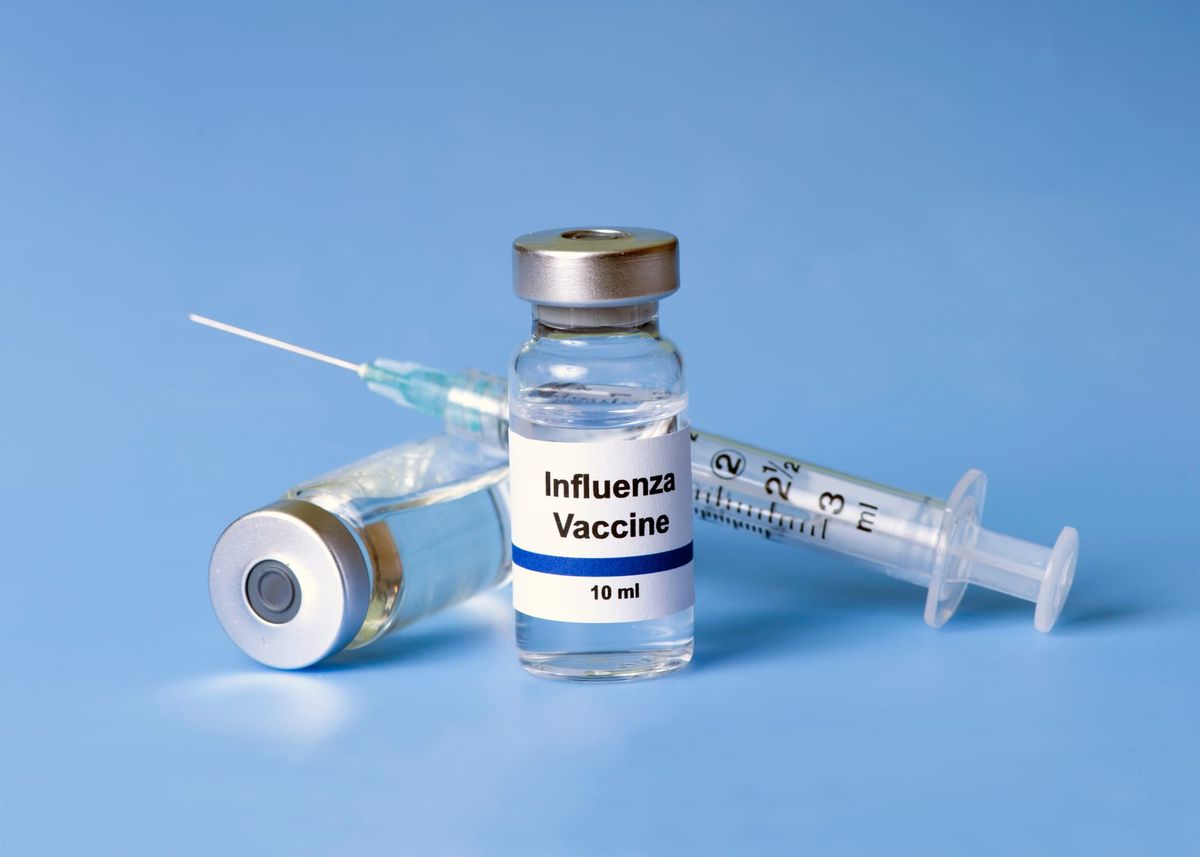
A new study published in Neurology found that older adults who received high-dose influenza (flu) vaccines had a lower risk of developing Alzheimer's dementia over the next few years compared to those who received standard-dose flu vaccines. Studying findings were based on a complex analysis of thousands of U.S. health insurance records.
Earlier research has shown the standard flu vaccine reduces Alzheimer's risk by as much as 40%. This study suggests that the high-dose version reduces Alzheimer's risk by 55%.
This study is observational, meaning it looked at data without conducting experiments. It cannot prove that high-dose flu vaccines prevent Alzheimer’s, but the results show the importance of further investigatiosns into how vaccinations influence brain health in older adults.
The flu is a virus that spreads easily between people, infecting the nose, throat, and lungs, causing body aches, fatigue, and fevers. Because the flu virus continually alters itself, new mutations can reinfect people.
High-Dose Flu Vaccine
As we age, the immune system does not work as well. Its ability to fight infections lessens, which is why many elderly people die from pneumonia. Vaccines are recommended as we age to compensate for decreased immune response.
The high-dose influenza vaccines contains more viral antigen than standard-dose vaccines. Antigens are the parts of a vaccine that prompt the immune system to respond. They are a harmless "look-alike" of an infectious agent that gets the immune system to be able to recognize and fight off a real infection from the harmful virus or bacteria, should the person contract it. Vaccines build up natural immunity without burdening the body with an actual infection.
The high-dose vaccine is designed for adults 65 and older, whose immune systems often do not react as strongly to vaccination as those of younger people.
Dr. Paul Schultz, lead author of the study, points out that “not everyone over age 65 gets the high dose influenza vaccine. The health department and pharmacies can run out of the high dose.”
Target Trial Emulation
This study sought to find out whether that higher antigen dose was associated with a difference in the risk of developing Alzheimer’s disease, the most common form of dementia.
Using target trial emulation (TTE), the data was organized to mimic a randomized clinical trial, so as to better detect what cause and effect might be happening. This approach also helps minimize biases that might obscure interpretation. Researchers ask, "What would we do if we could run a randomized trial?" They then use that concept throughout the analysis, attempting to replicate that design as closely as possible. The TTE method helps narrow down possible causal relationships when randomized trials cannot be done or are not available.
Scientists analyzed U.S. medical claims from 2014 through 2019 and evaluated participants’ data based upon when they received a vaccine and when follow-up began. The investigators adjusted for differences between the groups of age, medical conditions, medication use, previous vaccinations, and health care use.
Adults in the study were 65 and older and had at least two years of continuous medical and prescription coverage. None had previously been diagnosed with dementia, mild cognitive impairment, or encephalopathy, and none had received medications used to treat Alzheimer disease.
Of the people analyzed, 120,775 got a high-dose influenza vaccine and 44,022 received a standard-dose vaccine. Participants were followed for up to three years after vaccination. A new diagnosis of Alzheimer’s was identified through diagnostic codes or prescriptions for medications that treat Alzheimer’s symptoms or slow the disease process such as donepezil, galantamine, rivastigmine, or memantine.
The results showed that adults 65 and older who received high-dose flu vaccines had significantly lower Alzheimer's risk for up to 25 months after vaccination. The protective effect was stronger and lasted longer in women. Immune responses to vaccines differ between women and men, particularly in older age, with women appearing to benefit more.
Brain Protection from the Vaccine
Simply not getting influenza because the vaccine stopped it could protect against cognitive decline, sparing the body of systemic inflammation that infection causes which may injure the brain.
Vaccination might also produce broader changes in immune function which may also help the brain. Vaccines for tetanus and diphtheria, herpes zoster (shingles), and pneumonia are already linked to a lower Alzheimer's risk.
Alzheimer's Prevention
"Accessible, low-cost preventive measures are needed to reduce risk of dementia," the study authors write.
As the numbers of Alzheimer's cases grows, the study authors hope their work will assist in creating targeted interventions. More research in this area would clarify what the exact protective mechanisms of the flu vaccine are.
Important Limitations
This study had a short follow-up period of only 3 years, while Alzheimer's develops over many years. A study so short cannot establish whether high-dose vaccination changes the long-term course of the disease.
The authors had no data on education, income, exercise, health literacy, dementia risk, biomarkers, and other lifestyle factors. Researchers did not have information on the deaths that occurred during the study. That data could lead to different interpretations.
Alzheimer's diagnoses in insurance claims may not always be accurate.
Most older adults in the database had commercial Medicare supplemental coverage, which may limit how well these findings apply to the broader population.
Even with these limitations, the analysis suggests that influenza vaccine dosage may be associated with later cognitive health. At this time, the results do not justify using a high-dose flu shot specifically as an Alzheimer prevention treatment.