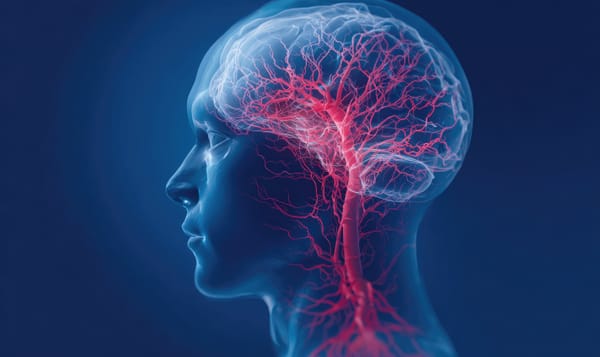
Alzheimer’s: Looking for the On/Off Switch
Could precision manipulation of genes be the future?


What if your doctor could treat your Alzheimer’s disease or even stop it even before it had a chance to start, by controlling a few genes in only certain cells in your brain? Recent breakthroughs at University New South Wales in Sydney, Australia, lay the groundwork for such futuristic approaches that are only imaginings at this time.
Using machine learning (artificial intelligence) and gene editing tools, these scientists from Down Under identified more than 150 regulatory interactions that take place in the brain, many of which have a role in controlling Alzheimer’s disease.
This work gives new insights into how the brain functions and what is activated genetically when Alzheimer’s occurs. Scientists now have a deeper understanding of DNA regions that can also help interpret other genetic studies.
Enhancers Control Genes
Published on Nature in December of 2025, no study before has discovered so many “enhancers” of Alzheimer’s disease. An enhancer is a string of DNA in the “junk” region. It is a sort of master switch that controls how much a gene is expressed.
For this study, scientists looked at enhancers that affect astrocytes. According to the National Cancer Institute, an astrocyte is a “large, star-shaped cell that holds nerve cells in place and helps them develop and work the way they should.” They are found in the nervous system.
Astrocytes are supportive cells in the brain that play an important part in Alzheimer’s disease, the most common form of dementia. Their role is protective, but astrocytes are also involved when neurodegeneration occurs.
Enhancers are particularly hard for science to make sense of because they can be located far away from the genes they influence. This study tested about 1,000 enhancers, which is an enormous amount. The 150 or so enhancers determined to influence Alzheimer’s refine the focus for future explorations into understanding the disease.
Enhancers are in the Junk DNA
Humans have about 20,000 genes that code, or, in other words, make proteins or enzymes. These coding genes make up only about 2% of the human DNA strands.
The other 90% of human DNA has long been called the "junk DNA.” These sequences packed in-between coding areas do not provide code for genes.
In forensic analysis, the unique pattern of junk DNA — not information about health that would be in the coding genes — is used for identification of individuals.
The purpose and function of in-between genes area is still not fully known. There has been much debate about whether this region is a junkyard, something of a historical record of an organism, or crucial for the life of an organism. This region binds and holds genetic information together.
Future Development
Lead author Dr. Nicole Green hopes similar research endeavors will be done on other brain cells besides astrocytes. “This is something we want to look at more deeply: finding out which enhancers we can use to turn genes on or off in a single brain cell type, and in a very controlled way,”
While this is just the beginning, understanding enhancers that control key astrocyte functions and genes implicated in Alzheimer’s disease could lead to future treatments. Discoveries like these build the necessary foundation for breakthroughs in medical care, although application of this data in a doctor’s office or pharmaceutical lab is a long way off.
In the future, perhaps a persons’s precise genes could be turned on or off to activate astrocytes when they are helping protect the brain or deactivate them when they are causing damage, to stop or prevent a disease like Alzheimer’s.